

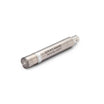
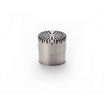
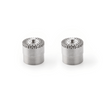
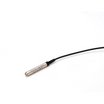
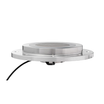
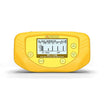
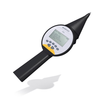
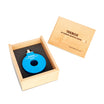
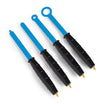
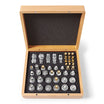

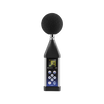



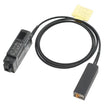
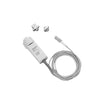
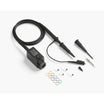

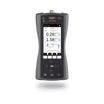
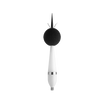
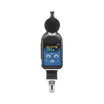

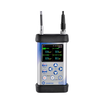
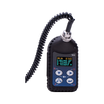

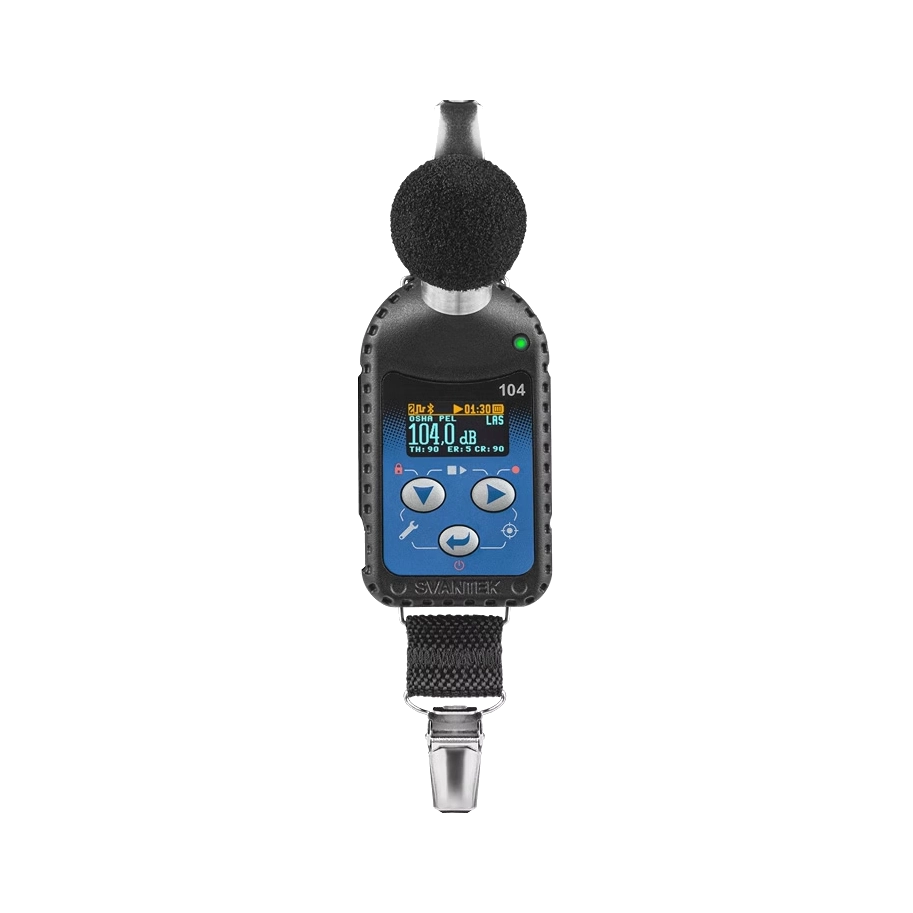
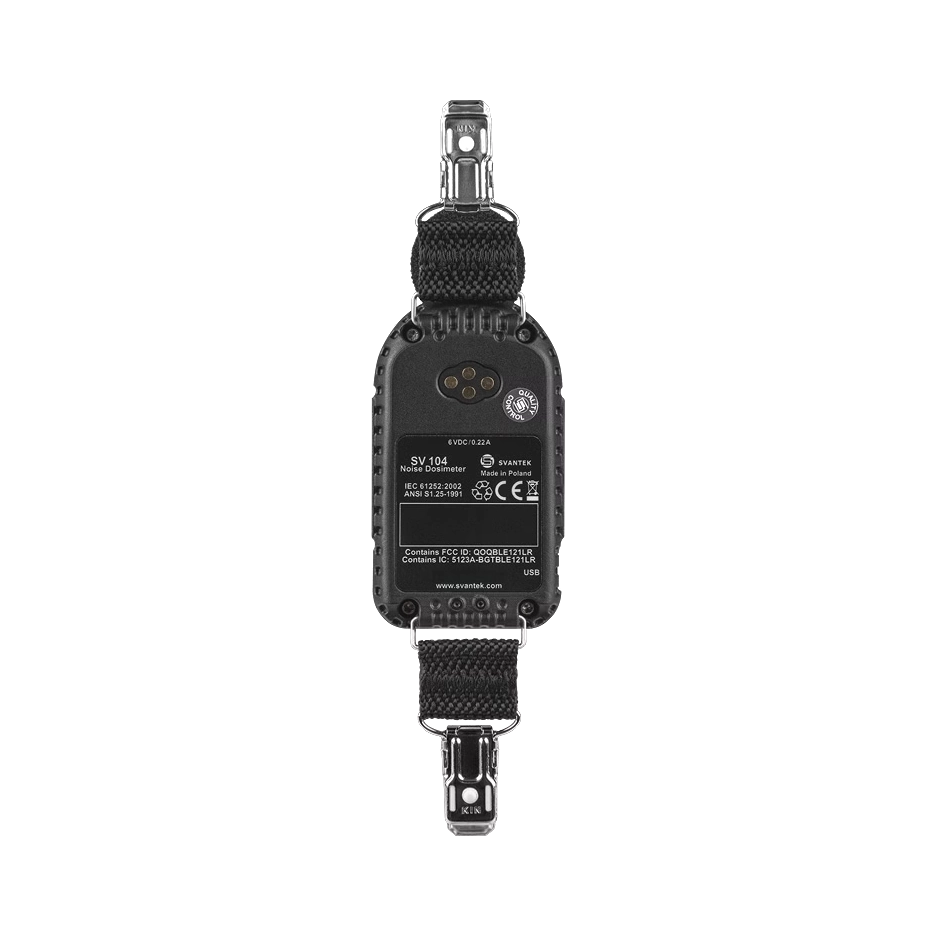
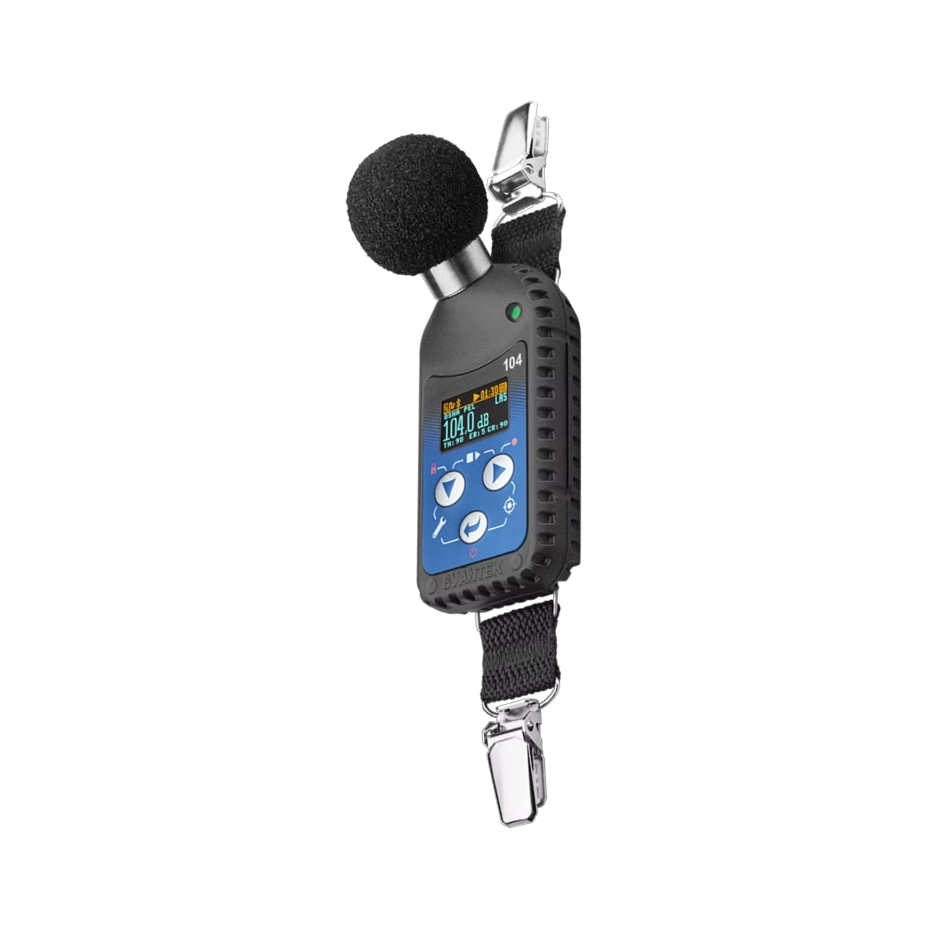
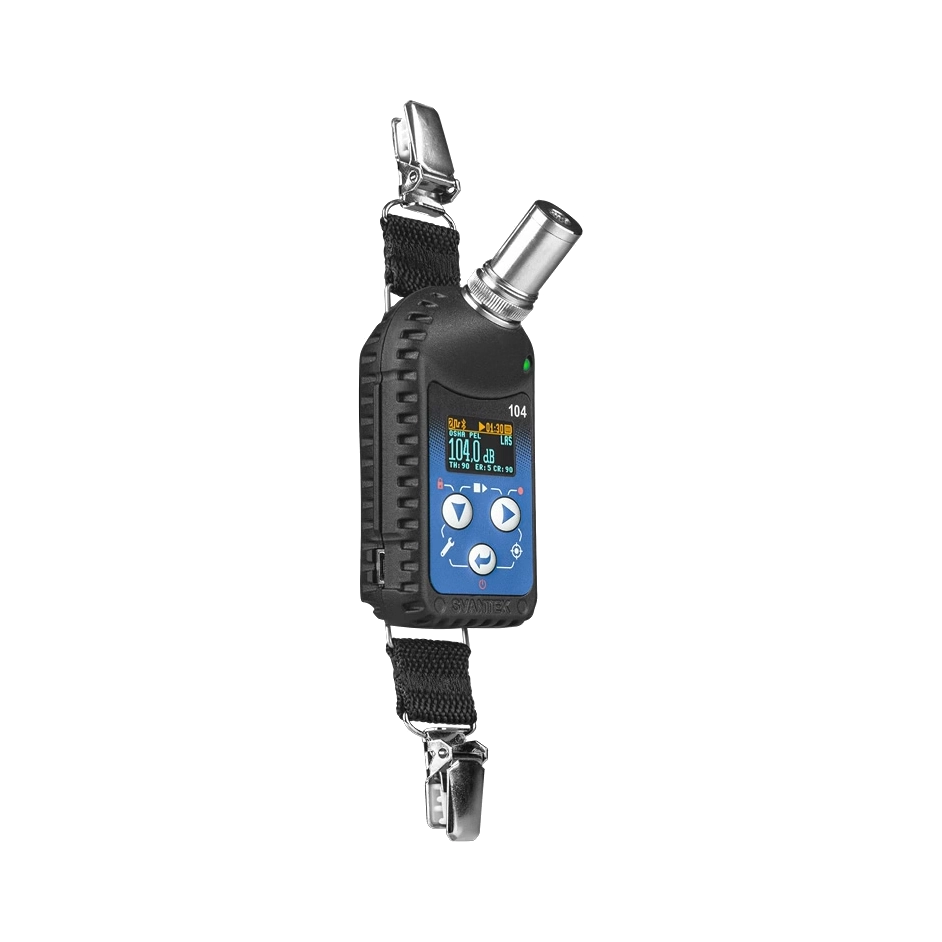
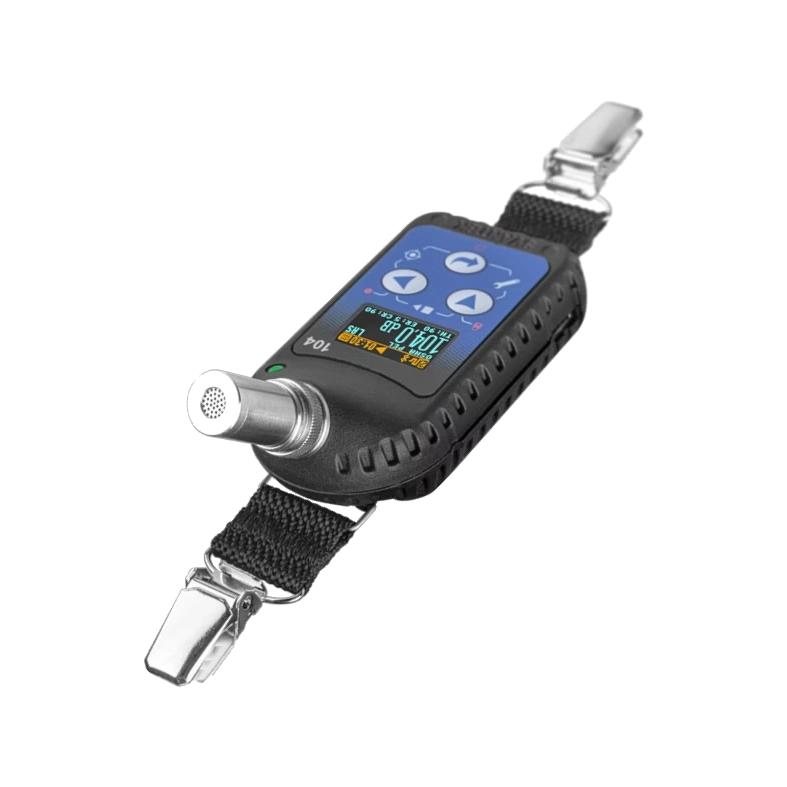
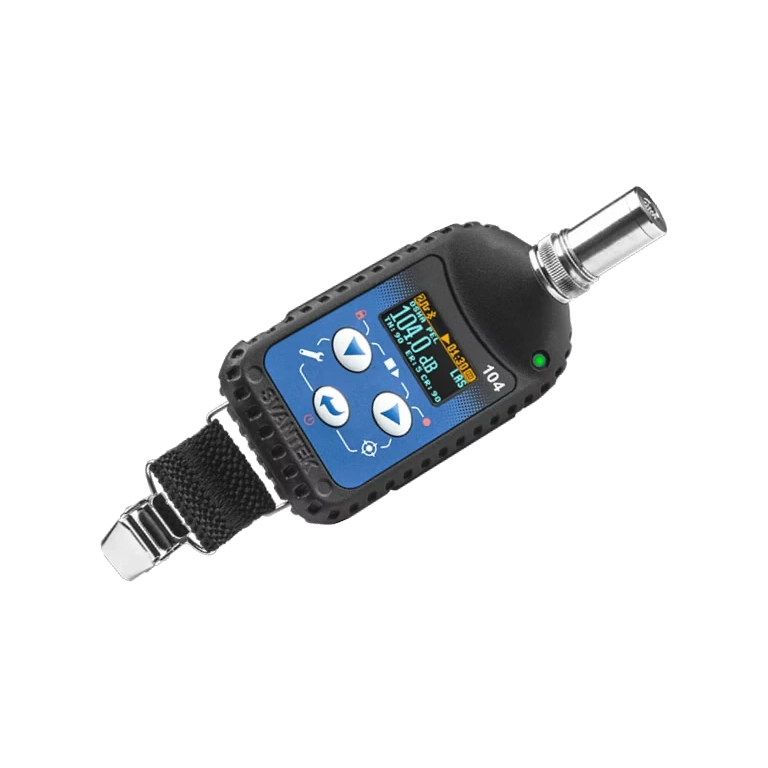
Svantek SV 104 Noise Dosimeter
Use our chat for technical support or contact us via +45 31 33 18 19 or salg@GOmeasure.dk
- Standards: IEC 61252 Ed 1.2 (R2017); ANSI S1.25-1991 (R2020)
- Total measurement range: 50 dBA RMS ÷ 140.1 dBA Peak
- Frequency range: 20 Hz ÷ 10 kHz
- Weighting filters: A, C and Z
- Time constants: Slow, Fast, Impulse
- Exchange rates: 2, 3, 4, 5, 6
- Number of channels: 1
- Memory: 8 GB
- Operating time: > 40 hours
;%20ANSI%20S1.25-1991%20(R2020)%0ATotal%20measurement%20range:%C2%A050%20dBA%20RMS%20%C3%B7%20140.1%20dBA%20Peak%0AFrequency%20range:%C2%A020%20Hz%20%C3%B7%2010%20kHz%0AWeighting%20filters:%C2%A0A,%20C%20and%20Z%0ATime%20constants:%C2%A0Slow...
)
Discover the possibilities
More information
Description
The SV 104 is a body-worn personal sound exposure meter (PSEM) for full-shift, near-ear monitoring in industrial and field environments. It meets IEC 61252:2017 and ANSI/ASA S1.25-1991 (R2020) requirements for personal noise dosimeters and—when used with listed accessories—meets IEC 61672-1:2013 Class 2 for integrating-averaging sound level meters. For hearing conservation and compliance reporting, it integrates sound pressure over time to compute cumulative exposure: Noise Dose (%), TWA8h, and LEX,8h / LEP,d under OSHA, MSHA, ACGIH, and ISO 9612.
The SV 104 records A-weighted SPL and supports three independent measurement profiles in parallel (e.g., 2/3/4/5/6 dB exchange rates and Fast/Slow/Impulse time weightings) across a typical range of 55–140 dB(A). A patented ½″ MEMS microphone with a lifetime warranty enables straightforward acoustic calibration and long-term stability. The instrument ships ready to use with core accessories; an intrinsically safe (SV 104 BIS) variant and a Bluetooth®-enabled (SV 104A) variant are available for hazardous locations and real-time app monitoring.
Product Highlights
- Compliance-ready: Validates measurements under OSHA 29 CFR 1910.95, NIOSH REL, MSHA, ACGIH, and ISO 9612 profiles.
- Class/Type Accuracy: IEC 61252:2017; ANSI/ASA S1.25-1991 (R2020); with accessories, IEC 61672-1:2013 Class 2.
- Wearable: Cable-free, lightweight design for worker mobility.
- Parallel profiles: Runs three profiles at once (separate exchange rates and time constants) to compare programs without repeat runs.
- Data logging: Continuous recording of sound level history, dual-step time-history of Leq/Max/Min/Peak for traceable reports.
- Patented MEMS mic (lifetime warranty): Shock-resistant capsule designed for long-term stability and easy field calibration.
- Acoustic calibration: Pre- and post-shift verification using a 94/114 dB source.
- Anti-misuse protection: built-in vibration sensor flags bumps/handling events to protect data validity.
- High-contrast OLED: readable in bright or low light; essential data on one screen.
- Battery life: capability to last a full shift, typical operation >40 hours (profile-dependent), supporting multi-day campaigns.
- Software & app: PC software and mobile app included; firmware upgradable.
- Tamper detection: Uses a built-in vibration sensor to identify if a worker struck the microphone.
- Vibration interference: Monitors physical shocks that can “false trigger” dB peaks.
- Event markers: Allows tagging of specific tasks or machines.
- Octave Band Analysis: Adds options for 1/1- and 1/3-octave band analysis and audio recording via perpetual licenses.
- Noise mapping: using personal data to identify “high noise zones.”
- Warranty coverage: 36-month instrument warranty plus extended microphone coverage.
- Intrinsically safe & Bluetooth options: SV 104 BIS kits for hazardous areas; SV 104A with Bluetooth for real-time alarms.
- Fleet bundle: 5-Pack Team (5 dosimeters, 1× calibrator, multi-bay USB hub, carrying case) for fast deployment.
Noise dosimeter practical features
How to use a noise dosimeter
Wearable noise dosimeter
Worn on the shoulder or collar (most-exposed side), SV 104 operates unattended, logging A-weighted SPL and time history. Automatic event detection and noise-source validation assist in identifying transient or task-based contributions. Mic placement and handling: clip the microphone on the most-exposed shoulder, face the inlet upward, keep it clear of clothing, and use a windscreen outdoors.

When to use a noise dosimeter
What factors determine the need for noise dose measurement?
Use personal dosimetry when workers are mobile or noise fluctuates; use area monitoring only where levels are steady and personnel are stationary. A dosimeter survey is recommended whenever exposure may reach or exceed an 8-hour threshold of 85 dBA, when processes or tooling change, or when the attenuation of current hearing protection needs verification.

Noise dosimeter calibration
Noise dosimeter calibration with an acoustic calibrator
Field calibration: before and after each survey, check sensitivity at the calibrator frequency using an acoustic calibrator; the SV 104 starts the auto-calibration routine automatically after the microphone is inserted. Traceability: schedule periodic calibration at an accredited laboratory in accordance with IEC 61252 and internal QA procedures to maintain documented measurement reliability.

Noise dosimeter vs sound level meter
What is the difference between sound level meters and noise dosimeters?
Dosimeter: body-worn on the shoulder for full-shift personal exposure (dose, TWA(8), LEX,8h/LEP,d), ideal for mobile or variable tasks. Sound level meter: hand-held or tripod-mounted for spot measurements and diagnostics at locations or workstations. Specifications for both instruments typically correspond to IEC 61672-1 Class 2 performance.

Noise dosimeter accuracy
Noise dosimeter accuracy
SV 104 performance corresponds to Class 2 integrating-averaging requirements in IEC 61672-1 for an A-weighted SPL range of 55–140 dB and a nominal frequency range of 20 Hz–8 kHz. A built-in tri-axial accelerometer records shocks or handling events so spurious data can be flagged in the time history and excluded from dose calculations.

Noise Dose Calculation
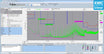
The dedicated Supervisor pc software can help you calculate your noise exposure.
SV 104 logs personal exposure in three independent profiles so results can be reported simultaneously using different configurations (e.g., 2/3/4/5/6 dB exchange rate; Fast/Slow/Impulse). 100% dose represents the permissible daily exposure for the selected standard, and each exchange-rate step halves allowable time per equal-level increase (e.g., +3 dB at NIOSH vs +5 dB at OSHA). The Supervisor PC software imports SV 104 data to produce reports for ISO 9612, OSHA, MSHA, and ACGIH workflows, and to support hearing-protection selection.

Noise Dosimeter Applications
Occupational Noise
Noise dosimeters conforming to IEC 61252 and ANSI S1.25-1991
Personal noise-exposure monitoring for hearing-conservation programs (ISO 9612 / OSHA 1910.95).
SV 104 is deployed for full-shift personal dosimetry where noise is mobile or task-varying—e.g., manufacturing lines, construction, mining, logistics, and utilities. Typical applications include baseline surveys, task-based studies, post-change assessments (new tools/processes), and verification that existing hearing protection provides adequate attenuation. Results feed ISO 9612 / OSHA / NIOSH reporting and guide selection of hearing protectors and administrative controls.

Specifications
Applications
- Sound measurements: ✓
- Occupational noise: ✓
Hardware Features
- Number of channels: 1
- Intrisic safety: -
- Self-vibration detection: ✓
- Auto-calibration: ✓
- Keyboard lock: ✓
- Remote communication: -
- Bluetooth: -
- Communication Interfaces: USB, infrared
- LED indicator: ✓
- Display: ✓
- Keyboard: 3 push buttons
- Memory: 8 GB
- Battery type: Ni-MH rechargeable cells
- Operating time: > 40 hours
- Operating temperature range: -10 °C ÷ +50 °C
- Humidity range: up to 95 % RH
- Weight: 121 g
- Size: 88 x 49.5 x 19.2 mm
- Docking station required: -
Sound measurements features
- Standards: IEC 61252 Ed 1.2 (R2017); ANSI S1.25-1991 (R2020)
- Microphone type: ST 104C MEMS microphone
- Linear operating range to IEC 61672: 55 dBA RMS ÷ 140.1 dBA Peak
- Total measurement range: 50 dBA RMS ÷ 140.1 dBA Peak
- Frequency range: 20 Hz ÷ 10 kHz
- Weighting filters: A, C and Z
- Time constants: Slow, Fast, Impulse
- Exchange rates: 2, 3, 4, 5, 6
- Criterion levels: selectable
- Profiles per channel: 3 with independent filters (x) and time constants (y)
- Min logging step: 1s logger step
- Statistics in octaves or third octaves: ✓
- Audio recording: option
- Voice coments: ✓
- 1/1 octave: option
Options
Video
Personal noise dosimeters
Use of PC software
The SV 104 is a body-worn personal sound exposure meter (PSEM) for full-shift, near-ear monitoring in industrial and field environments. It meets IEC 61252:2017 and ANSI/ASA S1.25-1991 (R2020) requirements for personal noise dosimeters and—when used with listed accessories—meets IEC 61672-1:2013 Class 2 for integrating-averaging sound level meters. For hearing conservation and compliance reporting, it integrates sound pressure over time to compute cumulative exposure: Noise Dose (%), TWA8h, and LEX,8h / LEP,d under OSHA, MSHA, ACGIH, and ISO 9612.
The SV 104 records A-weighted SPL and supports three independent measurement profiles in parallel (e.g., 2/3/4/5/6 dB exchange rates and Fast/Slow/Impulse time weightings) across a typical range of 55–140 dB(A). A patented ½″ MEMS microphone with a lifetime warranty enables straightforward acoustic calibration and long-term stability. The instrument ships ready to use with core accessories; an intrinsically safe (SV 104 BIS) variant and a Bluetooth®-enabled (SV 104A) variant are available for hazardous locations and real-time app monitoring.
Product Highlights
- Compliance-ready: Validates measurements under OSHA 29 CFR 1910.95, NIOSH REL, MSHA, ACGIH, and ISO 9612 profiles.
- Class/Type Accuracy: IEC 61252:2017; ANSI/ASA S1.25-1991 (R2020); with accessories, IEC 61672-1:2013 Class 2.
- Wearable: Cable-free, lightweight design for worker mobility.
- Parallel profiles: Runs three profiles at once (separate exchange rates and time constants) to compare programs without repeat runs.
- Data logging: Continuous recording of sound level history, dual-step time-history of Leq/Max/Min/Peak for traceable reports.
- Patented MEMS mic (lifetime warranty): Shock-resistant capsule designed for long-term stability and easy field calibration.
- Acoustic calibration: Pre- and post-shift verification using a 94/114 dB source.
- Anti-misuse protection: built-in vibration sensor flags bumps/handling events to protect data validity.
- High-contrast OLED: readable in bright or low light; essential data on one screen.
- Battery life: capability to last a full shift, typical operation >40 hours (profile-dependent), supporting multi-day campaigns.
- Software & app: PC software and mobile app included; firmware upgradable.
- Tamper detection: Uses a built-in vibration sensor to identify if a worker struck the microphone.
- Vibration interference: Monitors physical shocks that can “false trigger” dB peaks.
- Event markers: Allows tagging of specific tasks or machines.
- Octave Band Analysis: Adds options for 1/1- and 1/3-octave band analysis and audio recording via perpetual licenses.
- Noise mapping: using personal data to identify “high noise zones.”
- Warranty coverage: 36-month instrument warranty plus extended microphone coverage.
- Intrinsically safe & Bluetooth options: SV 104 BIS kits for hazardous areas; SV 104A with Bluetooth for real-time alarms.
- Fleet bundle: 5-Pack Team (5 dosimeters, 1× calibrator, multi-bay USB hub, carrying case) for fast deployment.
Noise dosimeter practical features
How to use a noise dosimeter
Wearable noise dosimeter
Worn on the shoulder or collar (most-exposed side), SV 104 operates unattended, logging A-weighted SPL and time history. Automatic event detection and noise-source validation assist in identifying transient or task-based contributions. Mic placement and handling: clip the microphone on the most-exposed shoulder, face the inlet upward, keep it clear of clothing, and use a windscreen outdoors.
When to use a noise dosimeter
What factors determine the need for noise dose measurement?
Use personal dosimetry when workers are mobile or noise fluctuates; use area monitoring only where levels are steady and personnel are stationary. A dosimeter survey is recommended whenever exposure may reach or exceed an 8-hour threshold of 85 dBA, when processes or tooling change, or when the attenuation of current hearing protection needs verification.
Noise dosimeter calibration
Noise dosimeter calibration with an acoustic calibrator
Field calibration: before and after each survey, check sensitivity at the calibrator frequency using an acoustic calibrator; the SV 104 starts the auto-calibration routine automatically after the microphone is inserted. Traceability: schedule periodic calibration at an accredited laboratory in accordance with IEC 61252 and internal QA procedures to maintain documented measurement reliability.
Noise dosimeter vs sound level meter
What is the difference between sound level meters and noise dosimeters?
Dosimeter: body-worn on the shoulder for full-shift personal exposure (dose, TWA(8), LEX,8h/LEP,d), ideal for mobile or variable tasks. Sound level meter: hand-held or tripod-mounted for spot measurements and diagnostics at locations or workstations. Specifications for both instruments typically correspond to IEC 61672-1 Class 2 performance.
Noise dosimeter accuracy
Noise dosimeter accuracy
SV 104 performance corresponds to Class 2 integrating-averaging requirements in IEC 61672-1 for an A-weighted SPL range of 55–140 dB and a nominal frequency range of 20 Hz–8 kHz. A built-in tri-axial accelerometer records shocks or handling events so spurious data can be flagged in the time history and excluded from dose calculations.
Noise Dose Calculation
The dedicated Supervisor pc software can help you calculate your noise exposure.
SV 104 logs personal exposure in three independent profiles so results can be reported simultaneously using different configurations (e.g., 2/3/4/5/6 dB exchange rate; Fast/Slow/Impulse). 100% dose represents the permissible daily exposure for the selected standard, and each exchange-rate step halves allowable time per equal-level increase (e.g., +3 dB at NIOSH vs +5 dB at OSHA). The Supervisor PC software imports SV 104 data to produce reports for ISO 9612, OSHA, MSHA, and ACGIH workflows, and to support hearing-protection selection.
Noise Dosimeter Applications
Occupational Noise
Noise dosimeters conforming to IEC 61252 and ANSI S1.25-1991
Personal noise-exposure monitoring for hearing-conservation programs (ISO 9612 / OSHA 1910.95).
SV 104 is deployed for full-shift personal dosimetry where noise is mobile or task-varying—e.g., manufacturing lines, construction, mining, logistics, and utilities. Typical applications include baseline surveys, task-based studies, post-change assessments (new tools/processes), and verification that existing hearing protection provides adequate attenuation. Results feed ISO 9612 / OSHA / NIOSH reporting and guide selection of hearing protectors and administrative controls.
Applications
- Sound measurements: ✓
- Occupational noise: ✓
Hardware Features
- Number of channels: 1
- Intrisic safety: -
- Self-vibration detection: ✓
- Auto-calibration: ✓
- Keyboard lock: ✓
- Remote communication: -
- Bluetooth: -
- Communication Interfaces: USB, infrared
- LED indicator: ✓
- Display: ✓
- Keyboard: 3 push buttons
- Memory: 8 GB
- Battery type: Ni-MH rechargeable cells
- Operating time: > 40 hours
- Operating temperature range: -10 °C ÷ +50 °C
- Humidity range: up to 95 % RH
- Weight: 121 g
- Size: 88 x 49.5 x 19.2 mm
- Docking station required: -
Sound measurements features
- Standards: IEC 61252 Ed 1.2 (R2017); ANSI S1.25-1991 (R2020)
- Microphone type: ST 104C MEMS microphone
- Linear operating range to IEC 61672: 55 dBA RMS ÷ 140.1 dBA Peak
- Total measurement range: 50 dBA RMS ÷ 140.1 dBA Peak
- Frequency range: 20 Hz ÷ 10 kHz
- Weighting filters: A, C and Z
- Time constants: Slow, Fast, Impulse
- Exchange rates: 2, 3, 4, 5, 6
- Criterion levels: selectable
- Profiles per channel: 3 with independent filters (x) and time constants (y)
- Min logging step: 1s logger step
- Statistics in octaves or third octaves: ✓
- Audio recording: option
- Voice coments: ✓
- 1/1 octave: option
Personal noise dosimeters
Use of PC software