























GPS Disciplined Oscillators
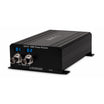
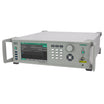
Safran is a world leader in GPS disciplined rubidium and crystal oscillators. Models include GPSDO 10 MHz reference frequency and advanced, customizable solutions of 5MHz to 40MHz. Since 2006, Safran has become a world leader in resilient PNT, proving the success of our GPSDO applications.
Guide to GPS Disciplined Oscillators (GPSDO)
GPS Disciplined Oscillators (GPSDO) are some of the most accurate and reliable time-tracking devices available on the market today.
They’re extremely powerful, effective, and downright indispensable for several essential industries across the globe, providing everyday technology into the hands of engineers and everyday citizens alike.
These devices are used for a variety of important applications in day-to-day life, to indispensable assets in incredible space missions.
But what exactly are GPS disciplined oscillators, or GPSDO, and how do they function?
The team at Safran has come together to create an in-depth guide on this fascinating technology. We’ll start with a glossary of the technical terms used to discuss this technology, then dive into how they work, what they’re used for, plus everything else you need to know.
What Are GPS Disciplined Oscillators (GPSDO)?
A GPS disciplined oscillator (GPSDO) is a GPS clock—it uses a GPS receiver and a stable, effective, high-quality oscillator to stay accurate with real-time reporting available within a few nanoseconds. This kind of speed is an incredible asset when it comes to navigation and tracking.
This highly accurate technology is absolutely crucial for success in critical applications related to space exploration, military, and government operations alike.
“No previous system has provided this potential combination of accuracy and availability. GPS has proven to be so successful that GPS receivers are now used to help control some Omega and Loran-C transmitters.”
NASA.gov
A disciplined oscillator is an oscillator with a continually adjusted output frequency to agree with a specific external reference, like an atomic clock.
By their very nature, these devices need cutting-edge technology to function as expected without breaking down. The best materials are what we specialize in at Safran — crystal, maser, and rubidium oscillators.
Regardless of the material, these oscillators accurately provide timing and control to a GPS receiver in a GPS/GNSS clock, like the LPFRS Rubidium Oscillator, a high-performance yet low-profile rubidium oscillator source.
How does a GPSDO Work?
A GPSDO works by using its high-quality oscillator to match signals being broadcast by GPS or GNSS satellites. Essentially, the oscillator output uses a tracking loop or microcontroller to stay in sync with a GNSS satellite signal or GPS device. (2)
The GPSDO focuses the oscillator output on a specific GNSS satellite signal, or steers the oscillator towards it when necessary. As a result, the timing signals of the GPSDO stay accurate to the nanosecond—exactly as needed. They are also capable of creating stabilities and frequency accuracies up to parts per trillion.
“[…] a GPS disciplined oscillator (GPSDO) usually consists of a quartz or rubidium oscillator whose output frequency is continuously adjusted to agree with signals broadcast by the GPS satellites.”
Computer Security Resource Center
In a nutshell, the rubidium, crystal, or maser oscillator is the powerful “man behind the curtain” in a GPS disciplined oscillator. It’s what keeps the device running perfectly on time, allowing the GPSDO to serve its purpose.
Interruption of Satellite Signals (Holdover Function)
Sometimes, certain issues outside of your control can negatively affect your ability to receive satellite signals without interruption. This may be due to a jamming signal, a lightning strike, or any number of other unexpected roadblocks which cause your GNSS antenna to fail, or cause your GPS receiver to lose its lock on the signals… or any number of other problems.
When your GPS/GNS receiver loses its lock, the holdover mode (or holdover function) kicks in, as mentioned above. But this is a very delicate balance to strike—while this is one purpose of the disciplined oscillator, the more powerful your device’s holdover function is, the bigger the oscillator needs to be… and the more expensive the price tag, too.
At Safran, our products are built to walk that extremely fine line. With numerous low-cost, low-noise, and even EMI-shielded options, we believe in offering only the solutions which actually make sense for your most critical applications. We also offer a wide range of testing instruments, frequency synthesizers, and stability analyzers.

How Does a Rubidium Frequency Standard Work?
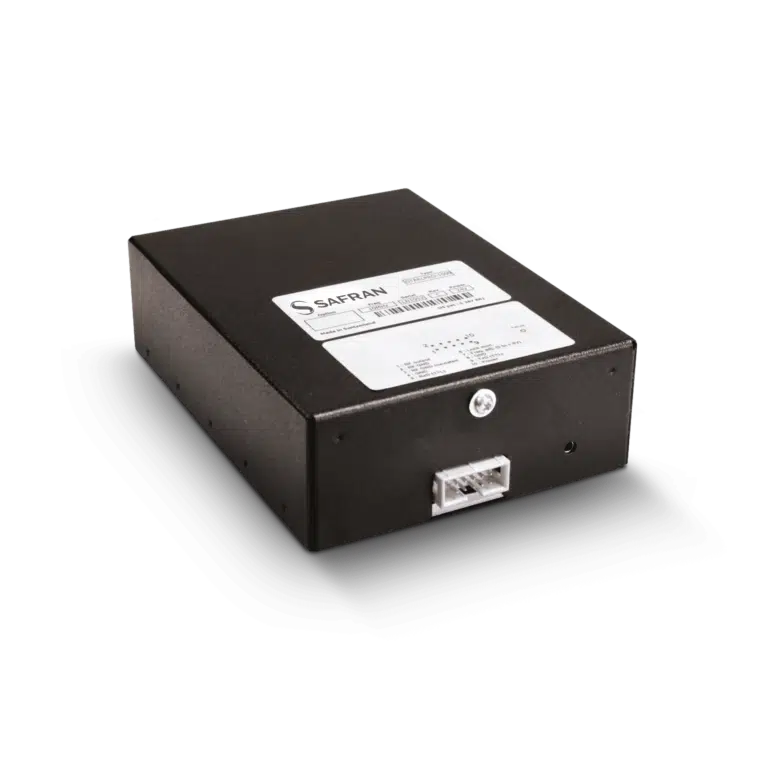
Basically, these devices contain a section filled with rubidium gas. Then, a light gets shone through the rubidium gas and measured.
Microwave energy is used to excite the rubidium gas, causing the energy level to change. This change also causes the light level to change, which is then detected—ultimately resulting in the measurement of oscillation via energy levels.
With rubidium, you’ll experience significantly less drift than with an Oven Controlled Crystal Oscillator, or OCXO.
What Happens When a GPS Signal Is No Longer Available?
When a GPS signal is no longer available, your GPSDO will go into what’s known as holdover mode. During holdover mode, your GPSDO works to maintain accurate timing by using only its disciplined oscillator.
This is why it’s absolutely crucial to work with a company like ours—a company that’s known for top-of-the-line crystal, rubidium, maser, and integrated GPS/GNSS clocks.
What Is a Multi-GNSS Disciplined Oscillator (GNSSDO)?
A multi-GNSS disciplined oscillator (GNSSDO) takes in signals from a GNSS, and spits out an extremely stable, accurate 1PPS signal from a very precise atomic clock.
These devices don’t require any periodic calibrations because they always make corrections using the GNSS signals they’re receiving.
In most cases, even if there’s an interruption to the GNSS signal, these devices stay highly accurate thanks to highly advanced holdover functions.
What’s The Difference Between GPSDOs and NCOs?
Basically, GPSDOs align their oscillators to their GPS signal by using blocks to create a 1PPS signal from their reference oscillator.
Next, this signal is compared to the GPS signal and the oscillator is steered to match using very small adjustments. Herein lies the key difference between Numerically Controlled Oscillators (NCOs) and GPSDOs.
NCOs don’t steer or discipline their oscillator with these same small adjustments. Instead, NCOs tend to use a crystal oscillator that’s low-cost and free-running. They digitally shorten or lengthen the output phase by using large steps. Ultimately, this results in alignment with the GPS receiver’s source for reference.
But to be clear, GPSDOs are absolutely guaranteed to have frequency accuracy—regardless of high jitter and/or phase noise.
What Is a Rubidium Frequency Standard?
A rubidium frequency standard is an extremely versatile and adaptable atomic clock that is lightweight, small, and superior in terms of short-term frequency stability.
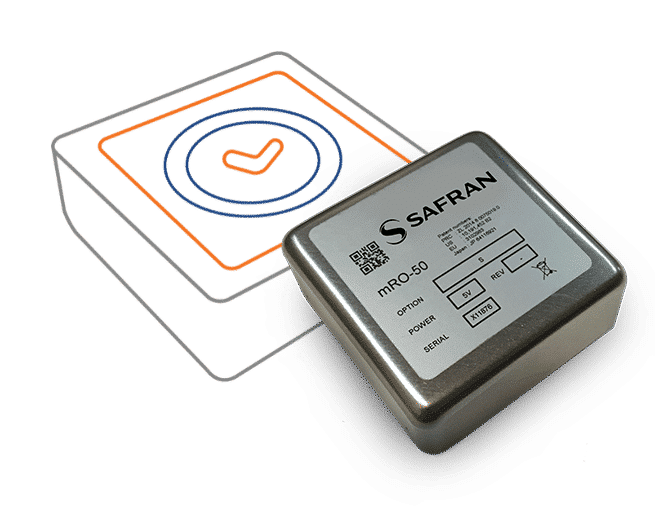
The mR0-50 is a portable, high-performance, high-precision Atomic Frequency Source. It’s also low SWaP-C (size, weight, power, and cost) and custom-built to serve the latest needs of the aerospace, military, and commercial industries. It’s a complete breakthrough in low-SWaP-C technology and offers a 1 day holdover below 1µs.
How Accurate Are Rubidium Clocks?
Rubidium clocks are the gold standard in atomic clocks. While other oscillators use cesium as a reference, these use—as you may have guessed—rubidium.
A rubidium clock can accurately keep time for multiple days with no input from a GPS receiver using its holdover mode, as mentioned above.
Today, even some wristwatches and home clocks are calibrated automatically using rubidium clocks located at an NIST station out of Fort Collins, CO. These are accurate to less than one microsecond of UTC! Rubidium clocks are among the most accurate designed by mankind.
For example, the LNRClok-1500 Rubidium Clock is a savvy, low-noise, low-cost GNSS-disciplined Rb oscillator (GPSDO). It includes optional GPS/GNSS receivers, plus position engine and anti-jamming technology.
Common GPSDO Applications
GPS disciplined oscillators are an absolutely vital method for timing across many industries that are critical to the well-being of humanity.
As we’ve discussed, UTC Time is kept accurate by GPS disciplined oscillators. UTC Time is the worldwide standard for frequency and time. GPSDOs also keep wireless base stations synchronized, as well as laboratories seeking alternative options to cesium-powered oscillators.
GPSDOs are instrumental in providing resilient PNT applications, LEO satellite communications, cube satellite communications, and critical infrastructure applications. They also may be used with passive radar, ionosondes, and synchronizing multiple RF receivers.
Generally speaking, GPS signals originate from MEO satellites. For this reason, GPSDOs are an extremely popular solution for precision timing than atomic clocks—the low SWaP-C is a very attractive and necessary function in many cases.
At Safran, we understand that there’s no one kit or module which is best for everyone. From business to business—and even project to project—the needs and conditions vary wildly.
Sometimes, a higher SWaP-C is justifiable due to your specific application. Other times, you may, for example, have an LEO satellite for which a GPSDO is the only appropriate choice.
We’ll never sell you on a solution because it’s new, on sale, or other unethical reasons. We are always fully committed to finding the best custom solution for you—and continuing to do so for every single application.
GPS Disciplined Oscillators from Safran: Quality You Can Trust
Even a microscopic discrepancy with your data’s stability, availability, or accuracy can lead to a major economic loss, disadvantages on the battlefield, complete mission failure, and even loss of life.
Here at Safran, we don’t believe in selling products. Instead, we offer solutions to your problems using the products in our toolkit—because we understand there’s no such thing as “one size fits all.”
Today, we’re the #1 global provider of atomic clocks and GPSDO technology. At this very moment, more than 350 Safran atomic clocks are orbiting the earth. Meanwhile, our rubidium oscillators and clocks are enabling new achievements in space exploration every day.
And we don’t take this business lightly. Every member of our staff is committed to the utmost ethical conduct in all the business we do—including, of course, our interactions with you. We understand the huge responsibility we have to operate with integrity due to the highly critical nature of the applications of our solutions.
Our customers have serious objectives just like you— aerospace, defense, government, and military organizations that can’t achieve their goals without reliable, precise, and rugged solutions. Our staff is equal parts passionate and innovative, guaranteeing successful custom solutions for all your needs.
Contact us today to start enjoying the benefits of working with a global leader in resilient PNT for all your critical applications.