




































































White Rabbit Solutions
Safran White Rabbit products provide sub-nanosecond synchronization and high accuracy time transfer, crucial for modern time-sensitive networking (TSN) and Synchronous Ethernet infrastructures. Utilizing Precision Time Protocol (PTP), our White Rabbit Switches offer precise timing that meets the needs of IEEE 1588 Timing and network synchronization equipment.
Sub-Nanosecond Synchronization
Safran technology ensures deterministic Ethernet performance across large networks, making it ideal for applications, such as FinTech and Data Centers, that require real-time data transfer. With Wavelength Division Multiplexing (WDM), our solutions provide scalability and efficiency in synchronization.
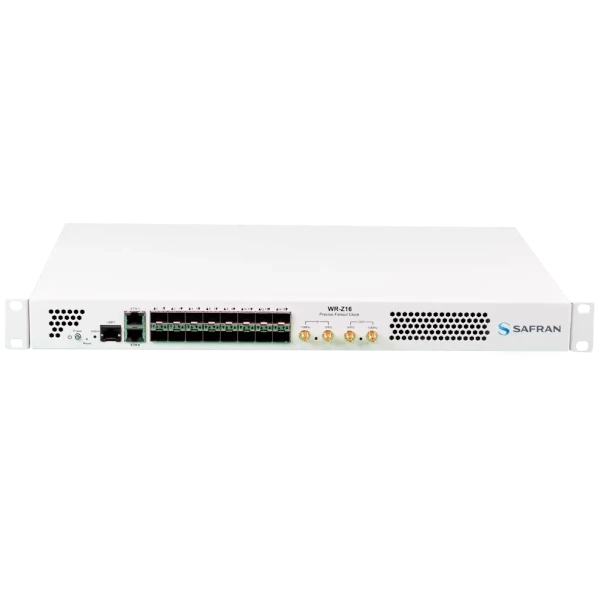
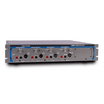
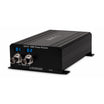
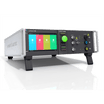
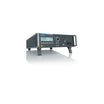
White Rabbit Z16
- Sub-nanosecond Time Accuracy
- Multi-Source Time References
- 16 Optical Timing Ports for WR, PTPv2 and NTP
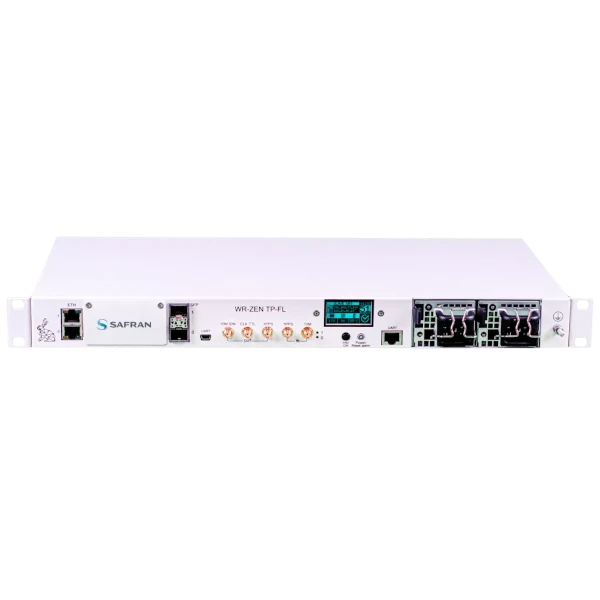
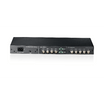
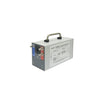
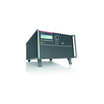
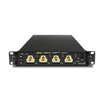
White Rabbit ZEN TP-FL
- Sub-nanosecond Time Accuracy
- 4x1PPS expansion / 8x1PPS expansion boards
- Remote configuration and monitoring
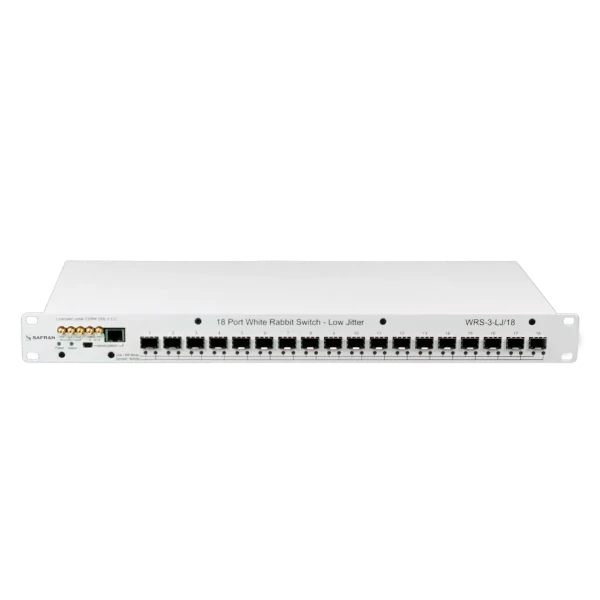
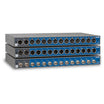
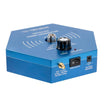
White Rabbit Switch – Low Jitter
- Sub-Nano Second Time Accuracy
- Time & Frequency Distribution
- Improved Clock Jitter and Phase Noise
What is the White Rabbit Project?
White Rabbit Project is a collaborative APNT project including CERN (the European Organization for Nuclear Research), GSI Helmholtz Centre for Heavy Ion Research and other partners from universities and industry to develop a fully deterministic Ethernet-based network for general purpose data transfer and sub-nanosecond accuracy time transfer.
It provides sub-nanosecond synchronization accuracy, which formerly required dedicated hard-wired timing systems, with the flexibility and modularity of real-time Ethernet networks (Synchronous Ethernet). Safran’s White Rabbit Solutions are engineered to integrate seamlessly with modern Synchronous Ethernet and PTP infrastructures, offering precision time transfer and robust scalability for complex network environments, ensuring reliable performance in demanding time-sensitive networks.
Key Features
- Reduces errors in time transfer with high accuracy phase and frequency time transfer
- Scalable to long distances
- Automatically calibrated links remove any potential offsets from variance between forward and reverse delays
- Easy to integrate into existing network infrastructure
- Utilizes standard Ethernet and extensions to PTP
- Can operate over spare fiber next to existing network links
- Can be multiplexed with data links using WDM (Wavelength Division Multiplexing)
Use Study: White Rabbit for Finance
White Rabbit is an ultra-accurate IEEE 1588 (PTP) implementation that achieves sub-nanosecond accuracy. Designed for use in avionics, telecommunications, space, defence and scientific facilities, White Rabbit has become the gold standard for time distribution within electronic trading networks.
Deployed by electronic trading firms in the finance sector to improve accuracy and precision within and between trading locations, White Rabbit leverages the latest technology to improve electronic trading decisions, data science, back testing and real time latency monitoring.
White Rabbit is also leveraged by exchange operators to improve accuracy and precision within their matching networks. White Rabbit introduces significant benefits including better transparency to exchange participants, high resolution timestamping for network latency monitoring and the ability to monetize time distribution and accurate timestamped data as a service to market participants.
Why White Rabbit?
Designed to improve, augment or replace existing timing infrastructure, White Rabbit drives business value by providing:
- Better accuracy and precision between trading sites
- Automatic failover between GNSS sources at geographically diverse sites
- Simplification of existing PTP network designs with improved accuracy
- Improved accuracy and precision for timestamping cards or switches
- Removal of requirement for PPS coaxial cabling within timing infrastructure
- Reduction in overall timing infrastructure using White Rabbit time services from exchanges or service providers

Use Case: Proprietary trading firm
A proprietary based trading firm deployed White Rabbit to improve accuracy and precision for internal timestamping via FPGA based switches.
Due to lack of GNSS capabilities at all locations, resilience between sites and time sources was a key business requirement. White Rabbit was used to provide resilience between timing equipment and geographic locations.
A tiered service was deployed allowing PPS to be used where sub-nanosecond accuracy was needed and an improved PTP service with ~30 ns accuracy made available to less time-sensitive users and applications.
Use Case: Exchange Operator
An exchange deployed White Rabbit to improve accuracy and precision for internal timestamping via FPGA based switches.
Timestamping was across all participant cross-connects in co-location, totaling 500+ ports, 60 devices and 4 data center modules.
White Rabbit provides sub-nanosecond level accuracy for all time stamped traffic passing through the infrastructure. This increases monitoring capability, improves historical data capture and introduces the possibility of additional client facing services related to timing.
Subsequently, this exchange, offered high precision timestamp file based services and White Rabbit co-location access to their trading participants.
Use Study: 10 Reasons Why Time is Critical for Trading Systems
Time synchronization is crucial in financial trading systems for several reasons. Here are the top 10:
1. Order Execution
Time synchronization ensures that order execution occurs accurately and consistently across different trading platforms. It allows traders to enter and execute orders at the intended time, avoiding discrepancies or delays that could impact trade outcomes.
2. Market Data Analysis
Financial trading relies heavily on real-time market data analysis. Time synchronization ensures that traders and algorithms receive market data feeds simultaneously, enabling them to make informed decisions based on the most up-to-date information.
3. Trade Settlement
Accurate time synchronization is essential for trade settlement processes, such as trade matching, confirmation, and clearing. It helps ensure that transactions occur in the correct sequence, reducing the risk of errors, disputes, or failed settlements.
4. Regulatory Compliance
Financial markets operate under strict regulations that often require precise timekeeping. Time synchronization enables compliance with reporting requirements, audit trails, and regulatory mandates, such as recording trade timestamps or meeting transaction reporting deadlines.
5. Event Sequence Reconstruction
In the event of a trade dispute or investigation, time synchronization allows for the accurate reconstruction of events. Traders can rely on synchronized timestamps to establish the sequence of trades, identify potential issues, and resolve disputes more effectively.
6. Algorithmic Trading
Many trading strategies rely on complex algorithms that execute trades based on specific market conditions. Time synchronization ensures that these algorithms operate with consistent timing, preventing discrepancies between different components of the system and optimizing trade execution.
7. Market Data Aggregation
Financial institutions often aggregate market data from various sources for analysis and decision-making. Accurate time synchronization allows for precise data alignment, ensuring that information from different exchanges or data providers is combined correctly and avoiding data inconsistencies.
8. High-Frequency Trading (HFT)
In high-frequency trading, where trades are executed in microseconds or even nanoseconds, time synchronization becomes critical. HFT firms depend on synchronized clocks to measure and react to small market inefficiencies and execute trades at lightning-fast speeds.
9. Risk Management
Effective risk management in financial trading requires accurate time synchronization. It allows risk models to factor in the timing of trades, market events, and other variables, enabling institutions to assess and mitigate risks more accurately.
10. Cross-Platform Compatibility
Traders often operate across multiple trading platforms, such as exchanges, dark pools, or alternative trading systems. Time synchronization ensures compatibility between these platforms, facilitating the seamless transfer of orders and information across different systems.
Overall, time synchronization is essential in financial trading systems to ensure accurate order execution, reliable data analysis, regulatory compliance, risk management, and seamless integration across various platforms. It plays a vital role in maintaining fairness, transparency, and efficiency in the global financial markets.
Use Study: White Rabbit Technologies to enhance 5G capabilities for Mobile Backbone
The ITU defines three main application areas for the enhanced capabilities of 5G: Enhanced Mobile Broadband (eMBB), Ultra Reliable Low Latency Communications (URLLC), and Massive Machine Type Communications (mMTC), with the last two several years away in most locations but at the same time drivers of the most advanced 5G applications. This imposes demanding synchronization needs for the mobile networks, making the correct timing a critical factor for achieving the expected 5G performance and mandatory for the future critical mission and low latency applications.
There are several protocols (mainly NTP and PTP) to carry out the synchronization of a mobile network, but both are designed to work over data networks and their accuracy is affected by the load on the network and the number of hops in the topology. They are on average, good time transfer solutions, but in the worst-case time delivery cannot be ensured. Time is a first order concept, and it cannot be easily patched, and its degradation is very difficult to detect and measure on later deployment stages. Mobile networks need to be designed having these issues considered from the very beginning.
For this reason, the deployment of a dedicated synchronization network enables total control over time and how it is distributed throughout the network, guaranteeing the correct operation of the system and the services offered on it. It can also be a key element of the visibility network to verify the network quality of service (QoS) during operation.
A network of this type would consist of three distinct layers: the core or backbone, the aggregation level, and the access level, with the backbone as the most critical part of the topology since the rest of the network will depend on its resilience, accuracy, and precision.
The Solution
Orolia has developed the concept of a long-distance telecommunication backbone (Figure 1) relying on the next generation of the time transfer protocol IEEE 1588-2019 and concretely on the High Accuracy (HA) profile (widely known as White Rabbit protocol). This new version of the protocol includes an extension for wide area network (WAN) utilization, cybersecurity mechanisms and the High Accuracy (HA) profile to distribute time and frequency with a deterministic performance better than 1 ns and very low jitter.

Figure 1: Long-distance telecommunications backbone – Source: Deutsche Telekom
The solution, based on this new profile, uses as its base an infrastructure of distributed redundant and calibrated GNSS time receivers and fiber optics links, whose references are scattered across hundreds of kilometers. In this way, the system will be able to get and distribute the time references available from multiple (and safe) locations to those ones that are experiencing a failure or under GNSS interferences (Figure 2).
Figure 2: Example of the resilient GNSS link for 2 locations.
In the configuration presented in this case, two DWDM links are being used to interconnect both locations. This is recommended to improve the resilience of the system and as a mechanism to remove the network asymmetry (Figure 3). Any wavelengths could be used, and calibration can be easily done using protocol parameters or directly from the calibrated GNSS receivers.

Figure 3: DWDM links
Regardless of this cross-protection mechanism, the key to make the core of the network resilient and secure is to protect each node in the network backbone. These ones, as it can be seen in Figure 2, are implemented using Safran SecureSync GrandMaster and WR Z16 White Rabbit distribution node. Both devices stand out for their security mechanisms and among them it is worth highlighting the following features:
About WR Z16
- Failover Clock Algorithm (FOCA) which automatically switches from one timing source to another in case a failure in the active timing source has been detected.
- Holdover which permits a maximum time drift of 1.5 μs after 24 hours.
- Multiple time source survey capabilities for timing reference cross-validation.
- Enhanced API for integration with logs, metrics, configuration, and alerts with third-party tools including not only SNMPv2/v3 but also support for Elasticsearch, Logstash, Kibana, Telegraf, InfluxDB, Zabbix, Grafana and many other widely use libraries and tools.
- Security features, including the latest IEEE 1588-2019 authentication and security features against cyberattacks, making it possible to deploy flexible security policies according to the security level required for the infrastructure.
About SecureSync
- Reference prioritization and failover which automatically switches from one timing source to another in priority order in case a failure in the active timing source has been detected.
- Holdover options which permits a maximum time drift of 1 μs after 24 hours.
- Enhanced API for integration with logs, metrics, configuration, and alerts with third-party tools including not only SNMPv2/v3, but a fully featured REST API.
- Security features, including access control lists, configurable password policies, and centralized authentication through LDAP, RADIUS, and TACACS+.
- GNSS Interference Detection and Mitigation through upstream elements like anti-jam antenna systems and software elements like Safran's IDM Suite with BroadShield to protect and detect interference on the GNSS signal.
As an added benefit, Safran products support a wide range of interoperability options with different interfaces and timing protocols (PTPv2, NTP, PPS/10MHz, IRIG, etc). These options extend the capability of the network by providinginteroperability protocols downstream from the backbone to a lower network stratum.
Backbone optimization
The core of the network relies on technologically advanced synchronization equipment such as resilient GNSS time servers, atomic clocks, or a combination of both (ePRTC clocks) to ensure accuracy, precision, stability and the robustness and resilience of the network.
However, as some of these devices (atomic clocks, ePRTC, etc.) have a high cost, considering the tradeoff that exists between that cost and the performance of the network, backbone optimization becomes a key and crucial factor for the deployment as can be seen in the following example (Figure 4).

Figure 4: Node interconnection scenarios
A redundant central node (site A) made up of resilient GNSS time servers (SecureSync) by Orolia, cesium atomic clocks and time distribution devices (WR-Z16). From this site, the rest of the sites in the topology can be synchronized as follows:
Sites C, D and E have their own GNSS time servers and time distributions devices, but also receive a backup timing feed from site A to take advantage of the GNSS time servers and cesium clocks there.
Site F is shown as an example of a site with special considerations that don’t allow for local GNSS time servers. The site location may not have good GNSS reception like within an urban canyon environment. There may be logistical reasons where installation of the GNSS antenna is difficult. It may just be budget constraints that limit the type of equipment allowed. Regardless of the reason, the deployment still supports timing, including resiliency, at Site F through the timing feeds from site A, and the GNSS time servers and cesium clocks there.
The final backbone deployment with a mix of these site configuration examples can balance costs with all of the accuracy, precision, stability, robustness, and resilience requirements that the customer might need in the network backbone.
Visibility
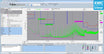
Finally, Orolia has developed specific templates which facilitate the integration of their devices via SNMP with the most used external tools for monitoring and management of networks, such as Zabbix (Figure 5), InfluxDB, Grafana, Chronograf, etc. This solution facilitates the supervision of a high number of time synchronization devices in a very visual and easy-touse way.
