









Occupational Noise Exposure

What is Occupational Noise
Occupational noise exposure refers to prolonged exposure to loud sounds in work environments, which can lead to hearing loss, fatigue, and reduced performance.
Why is it important
Protecting Workers from Harmful Noise Levels
Prolonged exposure to high noise levels in workplaces such as construction sites, manufacturing plants, transportation hubs, and industrial facilities can lead to hearing loss, fatigue, and decreased productivity. Proper noise exposure monitoring and control is essential for worker safety and compliance.
Standards Compliance
Adhere to OSHA, NIOSH, IEC, and ISO.
Protecting workers from hazardous noise levels is essential for health, safety, and regulatory compliance. Below are key concepts and regulations that define workplace noise exposure standards.
Occupational Noise Regulations in the U.S.
Adhere to OSHA, NIOSH, IEC, and ISO.
OSHA Standard 1910.95 regulates occupational noise exposure in the U.S., ensuring workers are protected from hearing damage.
Key OSHA Limits:
- 85 dBA TWA (8-hour time-weighted average) – Requires hearing conservation measures.
- 90 dBA TWA – The permissible exposure limit (PEL) for unprotected workers
- Hearing protection is mandatory when exposure reaches 85 dBA over an 8-hour shift.
- Noise monitoring is required if exposure exceeds OSHA limits.
Noise Dose Measurement & Permissible Exposure Time
OSHA calculates daily noise exposure as a percentage dose, with 100% dose equaling 90 dBA over 8 hours.
* For every 5 dBA increase, the permissible exposure time is halved.
85 dBA
90 dBA
95 dBA
100 dBA
105 dBA
110 dBA
115 dBA
8 hours (Action Level)
8 hours (100% Dose)
4 hours
2 hours
1 hour
0.5 hours (30 minutes)
0.25 hours (15 minutes)
Noise Exposure Limits & Measurement Methods
To assess workplace noise exposure, sound measurements follow specific weighting methods:
- A-Weighting (dBA) – Most common, mimics human ear sensitivity.
- C-Weighting (dBC) – Used for measuring peak noise levels.
- Z-Weighting (dBZ) – Flat frequency response, used for detailed noise analysis.
Special Noise Categories
Beyond standard workplace noise exposure, certain noise types require specialized monitoring:
Low-Frequency Noise (Infrasound)
- Frequencies between 1 Hz and 20 H.
- Common sources: industrial machinery, compressors, air conditioning systems.
- Measured using G-weighting filters or 1/3 octave analysis.
Ultrasonic Noise Exposure
- Frequencies between 10 kHz and 40 kHz.
- Found in ultrasonic welding, cleaning devices, and industrial processes.
- Measured using 1/3 octave band analysis up to 40 kHz.
LEX 8h - Eight Hours of Exposure (🌍 EU Standard)
ISO 1999 establishes LEX, 8h as the key occupational noise exposure indicator in Europe.
LEX, 8h is an 8-hour extrapolation of LAeq measured over the working hours.
Industry Applications
Noise exposure affects multiple industries.

Manufacturing & Factories
Monitoring heavy machinery and production noise.
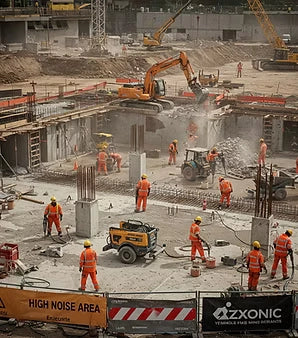
Construction & Heavy Equipment Operation
Measuring noise from power tools, jackhammers, and heavy machinery.

Transportation & Aviation Industry
Assessing noise exposure from aircraft, trains, and vehicle maintenance.

Energy & Power Plants
Noise monitoring in turbine halls, generators, and substations.

Warehousing & Logistics Hubs
Tracking noise from forklifts, loading docks, and automated systems.
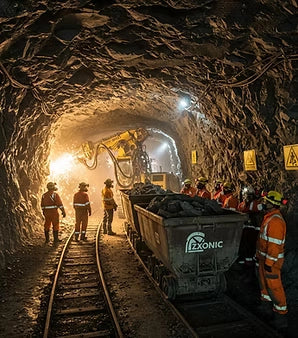
Mining & Underground Worksites
Monitoring noise from drilling, excavation, and heavy underground machinery.
Always meet your needs.
Our Solutions
We develop advanced noise monitoring and analysis solutions, integrating cutting-edge technology to ensure precision, compliance, and efficiency in noise assessment.