













Inertial Sensors
Physics-Based Inertial Sensor Solutions
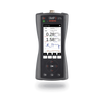
Safran’s Inertial Sensors measure rapid movement for all types of vehicles and platforms. Safran manufactures both inertial sensors that capture raw motion data with accelerometers and gyroscopes to more complex solutions such as inertial measurement units that can be embedded into larger systems. Safran’s technologies provide exceptional accuracy, stability, and reliability across Defense, Aerospace, Industrial, and Commercial sectors.



What is an Inertial Sensor?
A MEMS inertial sensor is a miniature device that can measure movement and orientation using internal sensors. It combines accelerometers that detect linear acceleration with gyroscopes that measure rotation, while inertial measurement units integrate both technologies to provide a complete picture of motion. In aviation, for example, this could be tracking aircraft pitch, roll, or yaw. In consumer electronics, inertial sensors support camera stabilization, navigation, gaming, robotics, and wearable devices. These measurements allow systems to estimate position, speed, and direction even when satellite signals are unavailable or unreliable. By combining complementary sensing methods, inertial measurement units deliver more robust and accurate motion information than either accelerometers or gyroscopes alone, supporting autonomous vehicles, drones, industrial automation, surveying, marine navigation, and advanced safety applications worldwide today. Because accelerometers, gyroscopes, and inertial measurement units can measure motion continuously in real time while remaining compact and energy efficient, they can be used across a wide variety of industries.
Trusted Inertial Sensor Technology Across Critical Industries


Use Cases For Inertial Sensors
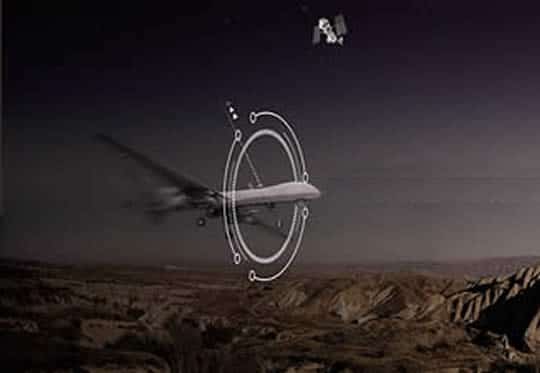
Platform Stabilization
Inertial sensors such as accelerometers and IMUs detect and correct unwanted motion, keeping platforms stable and level in drones, cameras, and vehicles operating in dynamic environments.
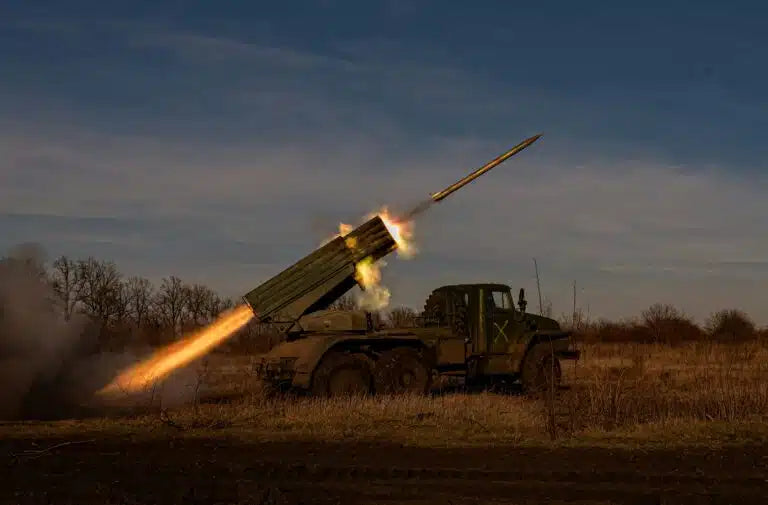
Pointing Systems
Accelerometers and gyroscopes together enable precise orientation and alignment, ensuring antennas, sensors, and weapons remain accurately pointed despite movement or external disturbances.

Smart Munitions
Inertial measurement units provide real-time orientation data, guiding munitions with high precision toward targets, even in GPS-denied or highly dynamic operational environments.

3D Mapping
Inertial sensors provide accurate motion tracking and orientation, enabling mapping systems to capture precise spatial data for terrain modeling, infrastructure analysis, and geospatial surveying.

Railway
Inertial sensors monitor train movement, acceleration, and orientation, supporting safety systems, track geometry measurement, and reliable navigation where GPS signals are unavailable.

INS
Inertial sensors combine accelerometers and gyroscopes to track position, velocity, and orientation, enabling reliable navigation without GPS in aerospace, defense, and autonomous systems.