











What is EMC pre-compliance testing?
Electromagnetic compatibility (EMC) pre-compliance testing helps engineering teams investigate electromagnetic emissions and immunity during product development. The aim is to find problems early, compare design changes and prepare for a formal assessment.
A bench measurement is not a certification or a guarantee of conformity. Its usefulness depends on the test method, equipment, configuration and repeatability.
Start with the applicable EU requirements
For an EU-focused project, start with the EMC Directive 2014/30/EU on EUR-Lex. Consult the current consolidated text, amendments and applicable dates rather than relying on a guide's publication year. Check the relevant product legislation and current references to harmonised standards before selecting a test plan.
Use the European Commission's EMC information as a starting point for official guidance. Ask an experienced EMC laboratory to help identify the appropriate methods and scope for your product.
Conducted emissions: investigate noise on power connections
Conducted-emissions testing investigates unwanted RF energy travelling along connected conductors, including power leads. A typical power-port screening setup combines the equipment under test, a suitable line impedance stabilisation network (LISN), a spectrum analyser or EMI receiver, and the required RF accessories.
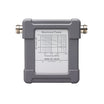
The LISN provides a defined impedance and a measurement connection. Select it for the actual supply type, current, voltage, frequency range and test method. Do not assume that a LISN suitable for one AC or DC application is interchangeable with another.
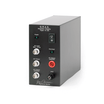
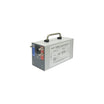
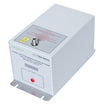
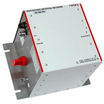
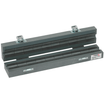
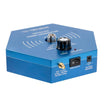
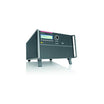
Explore the Tekbox TBL5016-3 50µH LISN as a candidate, then confirm its specifications against your test plan. Find the wider range in EMC Test.
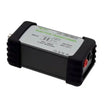
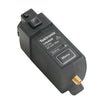
Before connecting an analyser, check permissible RF and DC input levels, attenuation and transient protection. Consider the Tekbox TBFL1 Transient Limiter, subject to its ratings and compatibility. Protection accessories do not replace safe working procedures. Mains-powered setups should be assembled and operated by qualified personnel following the equipment manuals.
Near-field troubleshooting: locate the source
Near-field probes help locate RF activity around PCB components, traces, connectors and cables. They are especially useful for comparing design revisions and investigating peaks already observed in a spectrum. Local probe readings are not a substitute for a radiated-emissions measurement.
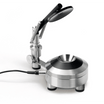
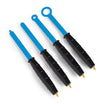
The Tekbox TBPS01 EMC Near-field Probe Set is a starting point to explore for this work. Confirm the included probes, connections and usable frequency range before ordering.
- Identify a frequency or frequency band of interest with the analyser.
- Scan the board systematically, keeping probe distance and orientation consistent.
- Use the appropriate magnetic- or electric-field probe to investigate suspected sources.
- Record the location, instrument settings and operating mode.
- Change one design element at a time, then repeat the measurement in the same configuration.
- Validate promising improvements using the relevant conducted- or radiated-emissions setup.
A strong local signal can help locate an area of interest, but it does not by itself establish the coupling mechanism or whether the product will exceed a regulatory limit.
Choose equipment around the measurement
For conducted-emissions screening, prioritise a suitable LISN, an analyser or receiver with the required frequency coverage and measurement functions, and correctly rated protection and cables. Check detector types, bandwidths, noise floor, dynamic range and correction-factor support against the intended method.
For PCB troubleshooting, start with near-field probes and a compatible analyser. Add amplification only when needed and check that strong signals will not overload the measurement chain.
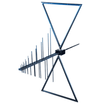
For radiated-emissions screening, plan for an appropriate antenna, measurement geometry and test environment. A near-field probe and a ground plane alone do not form a representative radiated-emissions test setup.
For immunity investigations, choose equipment for the specific disturbance and test method. Emissions measurements do not demonstrate immunity performance.
Accessories and repeatability
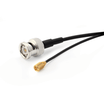
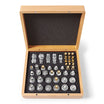
Check connector types, impedance, frequency range, power ratings and cable losses throughout the measurement chain. Candidate accessories include the Tekbox TBAS1 RF Attenuator Set, Tekbox TBCAS1 Coaxial Adapter Set and Tekbox NM-NM/125/RG223 RF Cable. Confirm compatibility rather than assuming these items form a complete kit.
Where the selected method calls for a reference ground plane, evaluate the Tekbox TBGP Roll Up Ground Plane against the required dimensions and arrangement. Document cable routing, grounding, loads, software, operating modes and ambient noise so that comparisons remain meaningful.
Browse EMC Accessories for supporting equipment.
Pre-compliance versus formal conformity assessment
Pre-compliance is a development activity, not an automatic pass or fail for market access. Results from an informal setup may differ from measurements performed using the applicable method in a controlled environment.
Do not equate a laboratory report with a universal legal certificate, or assume that every product follows the same assessment route. Consult the applicable EU legislation and a qualified conformity-assessment specialist for the appropriate route, technical documentation and declaration requirements.
There is no universal measurement margin that guarantees a successful formal assessment. Set a project-specific margin with your laboratory, taking account of measurement uncertainty, product variation, configuration and the difference between your screening setup and the intended assessment method.
Build your test plan before buying
- Define the product, supply, interfaces, operating modes and intended markets.
- Agree the applicable requirements and test methods with a qualified specialist.
- Choose instruments and accessories with suitable ratings and measurement capabilities.
- Record a baseline, investigate problems and repeat measurements after changes.
- Arrange the appropriate formal assessment and documentation review.
Explore GOmeasure's EMC Test collection and EMC Accessories collection to shortlist equipment. Product links are selection starting points, not guarantees that a particular setup meets your test requirements.
